Building a home in Nigeria often starts with a vital decision: choosing the right concrete blocks. One key choice is between hollow concrete blocks and solid concrete blocks. This decision impacts not only the strength and durability of your structure but also energy efficiency, cost, and project timelines — whether you're building in Owerri, Lagos, Abuja, Port Harcourt, or anywhere across the country.
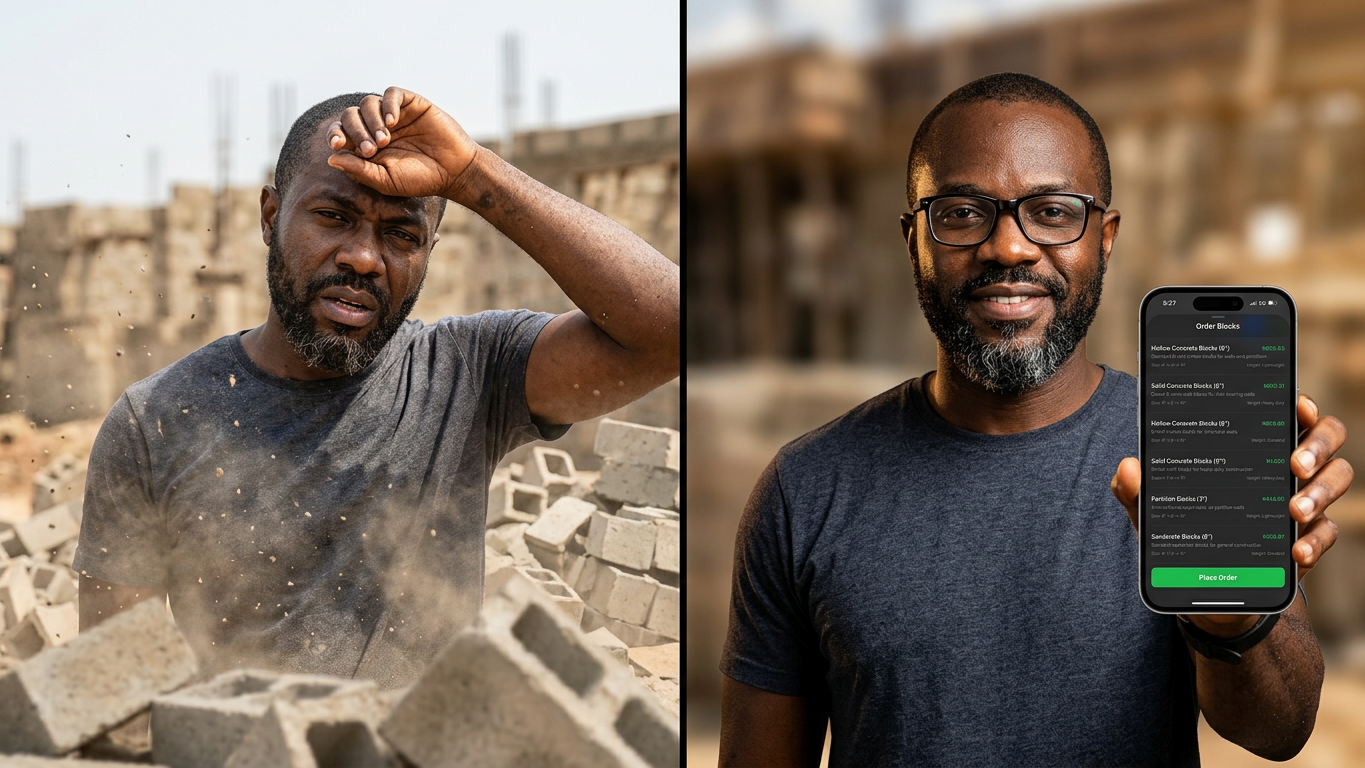
The rise of the digital block industry in Nigeria has made it easier for homeowners and contractors to analyze options and select the right materials. Platforms that let you buy concrete blocks online ensure greater convenience and transparency, while construction materials delivery services streamline logistics by efficiently moving materials to your site.
Understanding the key differences between these block types can help you build a home that meets your needs while staying within budget.
What Are Hollow and Solid Blocks?
Before making a decision, it's important to understand what differentiates hollow and solid blocks. Both are made from concrete mixtures of cement, water, sand, and aggregate — but their structure and application differ significantly.
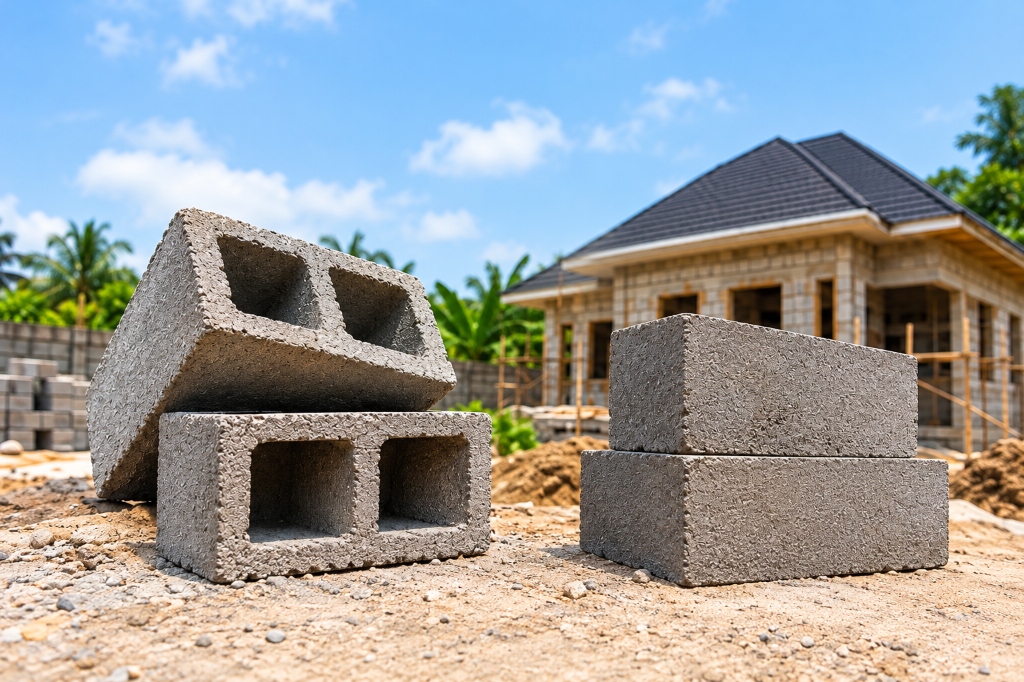
Hollow Concrete Blocks: These blocks have core spaces or holes that run through the length or height of the block. This design reduces weight, making them easier to handle and install. They also offer good thermal insulation, which is ideal for Nigeria's hot climate.
Solid Concrete Blocks: These blocks are dense and heavy with no hollow spaces. Their strength makes them suitable for load-bearing applications — such as foundations, exterior walls, and boundary walls — where higher structural integrity is required.
Both types are widely manufactured in Nigeria and are increasingly available through online platforms within the digital block industry Nigeria.
How Are They Made and Where Are They Used?
Manufacturing Process: From Mix to Block
The production process starts with mixing cement, sand, aggregate, and water in precise ratios. The mixture is poured into molds, which are then vibrated or mechanically compressed to compact the material before curing over several days to reach optimal strength.
For hollow blocks, molds contain cylindrical or rectangular cores to create the internal voids. These voids reduce weight and provide better insulation. For solid blocks, the molds are completely filled, producing a denser and more durable product.
Many manufacturers now list their production details online, helping customers across the construction industry make more informed decisions.
Typical Uses in Homes: Walls, Foundations, and Partitions
The choice of block comes down to its intended use:
- Hollow blocks: Ideal for non-load-bearing walls such as interior partitions or lightweight exterior walls. Their insulation properties make them particularly suitable for Nigeria's hot climate.
- Solid blocks: Used for heavy-duty applications like foundations and load-bearing walls, especially where the structural strength of the building is critical.
"Choose the block type to match the job: lighter hollow blocks for easy handling and insulation, solid blocks where strength counts most."
Pros and Cons: Hollow vs Solid
| Feature | Hollow Concrete Blocks | Solid Concrete Blocks | |---|---|---| | Weight | Lighter; easier to handle | Heavier; requires more labour | | Strength | Lower compressive strength; suited for non-load-bearing walls | High compressive strength; ideal for load-bearing applications | | Insulation | Better thermal and sound insulation | Poorer insulation due to density | | Cost | Generally lower cost per unit | Higher cost per unit, but may need fewer blocks overall | | Availability | Widely available; easy to source | Common, but slightly less versatile |
When it comes to quality assurance, always request a strength certificate from your supplier. Reliable delivery and consistent solid concrete blocks from vetted suppliers are core to what the digital block industry Nigeria is solving with innovative technology solutions.
Where in Nigeria Does This Matter Most?
Block selection is especially critical across high-growth residential zones:
- Owerri & Imo State — One of Nigeria's fastest-growing cities, with demand for both affordable housing estates and high-end residential builds. Hollow blocks dominate interior walls here due to the humid climate, while solid blocks are standard for perimeter fencing and ground-floor structures.
- Lagos — Nigeria's commercial capital. The high density of multi-storey developments in areas like Lekki, Ajah, and Surulere means solid blocks are the go-to for structural walls, with hollow blocks used for upper-floor partitions.
- Abuja (FCT) — The capital city's estates in Gwarinpa, Jabi, and Lugbe rely heavily on solid block foundations, with a growing preference for hollow blocks in estate perimeter walls to reduce costs.
- Port Harcourt — Nigeria's oil city. Builders in GRA, Rumuola, and D-Line often combine both block types on the same project — solid for the base, hollow for upper levels — to balance cost and structural load.
- Enugu — In Coal City, the hilly terrain means solid blocks are preferred for retaining walls and sloped foundations, while hollow blocks keep upper wall costs manageable.
- Ibadan & Oyo State — With rapid suburban expansion in areas like Bodija, Challenge, and Iwo Road, hollow blocks are widely preferred for their speed of installation and lower unit cost on large-footprint homes.
- Kano — Nigeria's northern hub favours solid blocks for boundary walls and commercial builds, with hollow blocks used across estate residential projects for thermal comfort in the dry climate.
No matter your location, construction materials delivery Nigeria platforms like Blucindustry ensure your blocks reach your site fresh — whether you're in the South East, South West, North, or South-South.
The Role of Nigeria's Digital Block Industry
The digitalization of construction in Nigeria is transforming how blocks are sourced and delivered. Digital platforms connect buyers with vetted block manufacturers, provide transparent pricing, and enable reliable delivery direct to construction projects.
This is especially important for contractors and developers working on multiple sites who need accurate stock, fast order cycles, and traceable quality for each batch of building materials.
Block industry technology has also enabled better logistic networks — ensuring that whether you're ordering concrete blocks in Lagos, building materials in Abuja, blocks in Port Harcourt, or block supply in Owerri, your materials arrive on time and meet the right specifications for your construction projects in the Nigeria construction sector.
Frequently Asked Questions
Which block type is best for a single-storey house? Hollow blocks work well for interior partitions and non-load-bearing walls, while solid ones are ideal for foundations and load-bearing walls.
Are hollow blocks weaker than solid blocks? Yes, hollow blocks have lower compressive strength — but they are more than sufficient for non-load-bearing applications.
Where can I buy concrete blocks online in Nigeria? Platforms in the digital block industry Nigeria — like Blucindustry — offer vetted options with transparent pricing and delivery scheduling.
Do hollow blocks save money? Yes, they're often cheaper per unit due to less material. Combined with reduced labour costs from their lighter weight, they offer excellent value for appropriate applications.
How should I plan block deliveries? Use a construction materials delivery Nigeria service to coordinate shipping timelines and avoid delays. Platforms like Blucindustry let you track your order from production to site — covering Owerri, Lagos, Abuja, Port Harcourt, Enugu, Ibadan, Kano, and beyond.
Does block choice differ by location in Nigeria? Yes. High-humidity zones like Port Harcourt and Owerri benefit more from hollow blocks' thermal properties. Dry regions like Kano and Abuja often use solid blocks for exterior walls. A local supplier within the digital block industry Nigeria can advise on what's most used in your area.
Ready to order? See how our app makes the process easy in Article: Build your house without stress.